
US-Iran Conflict 2026: How the Middle East Crisis is Shaking Bali’s Tourism
The military escalation between the United States and Iran in early March 2026 has sent shockwaves far beyond the borders of the Middle East. While the "Island of the Gods" may be thousands of miles away from the Persian Gulf, the ripples of this conflict are hitting Bali’s tourism sector with unexpected force.
3/2/20262 min read
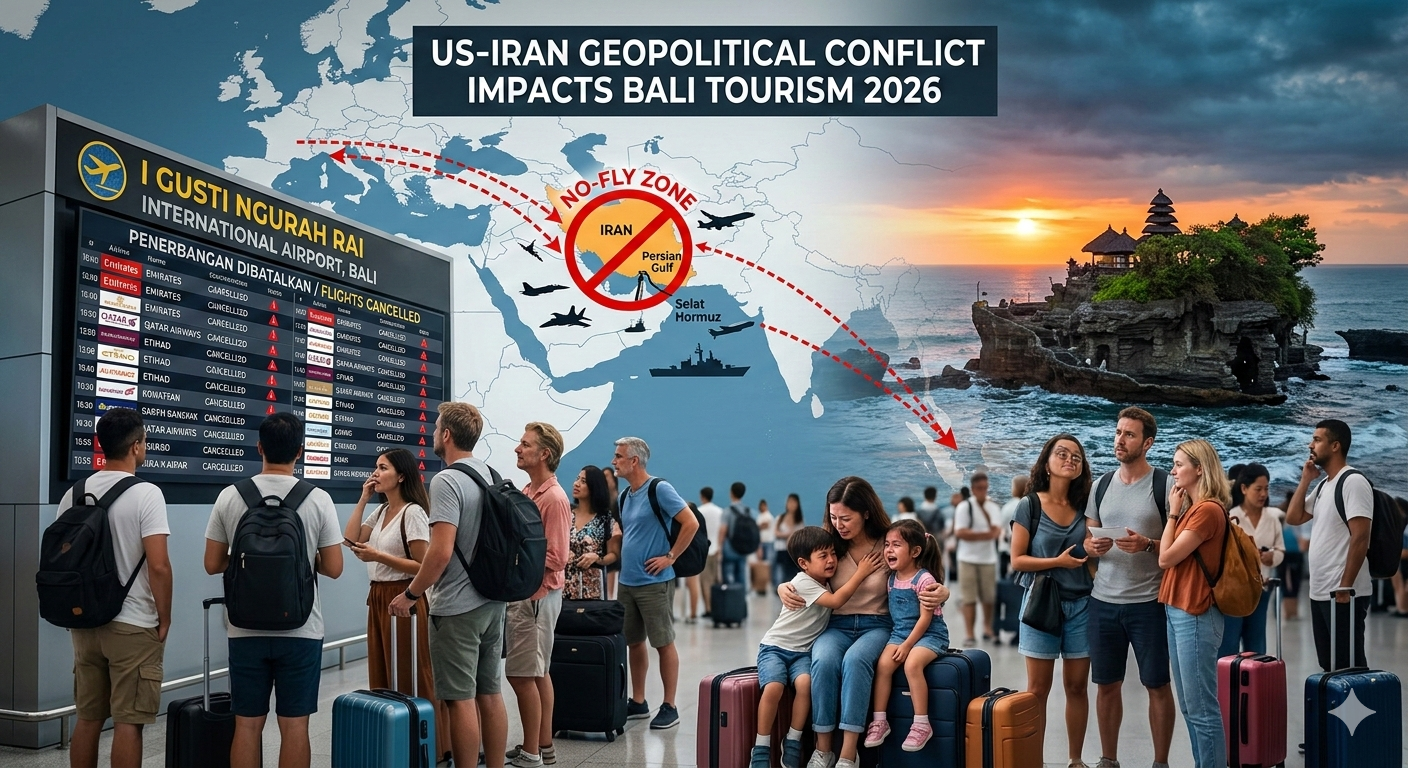
The military escalation between the United States and Iran in early March 2026 has sent shockwaves far beyond the borders of the Middle East. While the "Island of the Gods" may be thousands of miles away from the Persian Gulf, the ripples of this conflict are hitting Bali’s tourism sector with unexpected force.
From grounded flights to economic shifts, here is how the global tension is impacting Southeast Asia’s favorite holiday destination.
The Sky is Closing: Why Bali is Feeling the Heat
Bali’s tourism ecosystem relies heavily on international connectivity. Major carriers that bridge Europe and Australia to Bali—such as Emirates, Qatar Airways, and Etihad—all operate through the now-volatile Middle Eastern airspace.
The "No-Fly Zone" Effect
With the recent implementation of no-fly zones over Iran and parts of the Persian Gulf, flight paths have become a logistical nightmare.
Rerouting: Airlines are forced to take longer, more expensive routes to avoid the conflict zone.
Cancellations: As of March 1, 2026, several key flights to I Gusti Ngurah Rai International Airport have been suspended.
Stranded Travelers: Over 1,600 international tourists are currently reported stranded in Bali, facing uncertainty as their return flights are cancelled or delayed indefinitely.
The Rising Cost of Paradise: Fuel and Currency
The conflict isn't just a logistical hurdle; it’s an economic one. As the threat of a blockade at the Strait of Hormuz looms, the global market is reacting sharply.
Aviation Fuel (Avtur) Surge: With oil prices spiking, airlines are expected to introduce "war surcharges" or significant fare hikes. Visiting Bali just got a lot more expensive for the average traveler.
Rupiah Volatility: The Indonesian Rupiah (IDR) has seen a dip against the US Dollar, recently touching the Rp16,800 mark. While this might seem like a "discount" for those holding USD, the global instability usually discourages long-haul travel.
Inflation on the Ground: Increased energy costs mean higher operational bills for Bali’s luxury resorts and local warungs alike, potentially leading to a rise in prices for services and goods.
Government Response: "Force Majeure" and Diplomacy
The Indonesian government is not standing idly by. Immigration at Ngurah Rai has already moved into "standby mode" to assist tourists whose visas might expire due to flight cancellations.
Note: If you are currently in Bali and your flight has been cancelled due to the conflict, you may be eligible for an emergency stay permit. Check with the local immigration office to avoid overstay fines.
On the diplomatic front, President Prabowo Subianto has reiterated Indonesia’s commitment to peace, offering to act as a mediator to ensure global stability—and by extension, the safety of international travel corridors.
Conclusion: A Test of Resilience for Bali
2026 was supposed to be a record-breaking year for Bali. Instead, the US-Iran conflict has presented a new challenge. However, Bali has proven its resilience time and again—from pandemics to volcanic activity.
Travel Tips for March 2026:
Check Flight Status: Use real-time tracking apps for flights like EK369 or QR963.
Travel Insurance: Ensure your policy covers "Acts of War" or "Civil Unrest" for cancellations.
Stay Informed: Follow official embassy updates if you are a foreign national currently on the island.